Source Double Sided Fixed Menu Holder for Retail, Cafe, and Store
Find a double sided fixed menu holder from 30 verified listings. Compare acrylic and plastic options with transparent or clear finishes. Evaluate customization, eco-friendly features, and shipping methods to select the right display solution for your business needs; compare the available evidence and request quotations based on your requirements.
Key considerations
Products List






Comprehensive Sourcing Guide
Double Sided Fixed Menu Holder Sourcing Guide
Procuring double-sided fixed menu holders requires careful attention to material integrity and mounting stability, as these units must remain stationary while displaying information in high-traffic environments. The observed market data indicates that acrylic and plastic are the primary materials used, with specific models like GQ-MH04 and GND-AD-NSH005 offering transparent or clear finishes suitable for modern retail aesthetics. Buyers should prioritize units that explicitly state a fixed rotary mechanism to ensure the display does not rotate unintentionally, which is critical for maintaining a professional appearance in supermarkets and specialty stores.
Commercial listings reveal a wide variance in customization options, ranging from fully customized silk-screening and UV printing to non-customized standard units. While some suppliers accept small quantities, others enforce a minimum order quantity of 1000 pieces, necessitating a clear assessment of inventory needs before initiating contact. The production lead times vary significantly, with samples potentially ready in three to fifteen days, whereas full production runs may require up to forty days. This disparity demands early planning to align manufacturing schedules with exhibition dates or store opening deadlines.
Product Scope and Observed Listing Signals
The product scope for double-sided fixed menu holders encompasses a variety of sizes, including A4, A5, and A6 formats, designed to accommodate different document dimensions. Listings frequently highlight features such as eco-friendly materials and durable construction, which are essential for long-term use in indoor settings like home offices, convenience stores, and exhibition shows. The observed models often specify a folded or unfolded state, with many units arriving in an unfolded condition ready for immediate installation, though some designs offer foldable and detachable functionality for easier transport.
Buyers must distinguish between units intended for general document display and those specifically engineered for high-visibility signage. The data shows that some products are explicitly marked as non-antitheft, which is a crucial detail for securing valuable menus or price lists in public areas. Additionally, the packing methods vary from standard plastic bags and cartons to custom requests, influencing the final cost and protection level during ocean or air shipping. Understanding these scope differences helps in selecting the right unit for specific retail environments without overpaying for unnecessary features.
Technical Specifications to Verify
Technical verification begins with confirming the exact dimensions and material composition, as standards like W90xD130xH140mm or 12.7x7.62x17.78CM dictate compatibility with existing display fixtures. The injection molding craft is noted for specific plastic models, ensuring structural rigidity, while acrylic models offer superior clarity and a premium look. Buyers should verify the HS code, typically 3926909090 for plastic articles, to ensure accurate customs classification and avoid unexpected duties during international procurement.
The mounting mechanism and weight characteristics are equally critical for installation success. Most observed units are described as lightweight, which simplifies handling but requires verification of the fixed mounting hardware to prevent slippage. The standard production models often support double-sided display capabilities, allowing for maximum information density on a single unit. It is essential to confirm whether the product supports specific logo application methods like engraving or silk-screening, as these customization options directly impact the final aesthetic and branding effectiveness of the menu holder.
Compliance and Safety Documentation
While specific certification documents are not explicitly listed in the provided product facts, buyers must request proof of material safety compliance, particularly for acrylic and plastic products used in food-adjacent environments like supermarkets. The eco-friendly feature claimed by several suppliers should be substantiated with relevant material safety data sheets or environmental compliance certificates to validate the sustainability claims. Without explicit certification data in the listing, the procurement team must treat these attributes as observations requiring third-party verification before finalizing large orders.
Safety documentation also extends to the structural integrity of the fixed mounting system, ensuring it can support the weight of documents without failure. Buyers should inquire about the origin of the materials, as products originating from Guangdong or Zhejiang, China, may be subject to different regional manufacturing standards. It is prudent to request test results regarding the durability of the injection molding or acrylic casting to ensure the product can withstand daily handling in high-traffic retail spaces without cracking or deforming over time.
Cost Drivers and Commercial Terms
Cost drivers for double-sided fixed menu holders are heavily influenced by the level of customization and the chosen material, with acrylic generally commanding a higher price point than standard plastic. The observed price range of 0.01 to 31 USD suggests significant variation based on order volume and specific model features, such as the inclusion of custom logos or specialized packing. Buyers should be aware that while small quantity orders might be accepted by some suppliers, the standard MOQ of 1000 pieces often yields better unit economics for bulk procurement.
Commercial terms regarding lead times and shipping methods must be clearly defined to avoid supply chain disruptions. Production lead times can extend from 25 to 40 days for full production runs, which is a critical factor for time-sensitive projects like exhibition shows or seasonal promotions. Shipping options include ocean, air, and express delivery, each carrying different cost implications and transit times. Negotiating these terms early ensures that the total landed cost aligns with the budget and that the delivery schedule meets the operational requirements of the retail or exhibition venue.
Supplier Qualification and Quality Control
Supplier qualification should focus on verifying their capacity for OEM and ODM services, as the market data indicates a strong acceptance of these models for custom branding. Buyers must assess the supplier's ability to handle the specific production lead times observed, ranging from three days for samples to forty days for mass production, to ensure they can meet project deadlines. The presence of multiple product models, such as GQ-MH04 and VG-Ly04, suggests a diverse manufacturing capability, but buyers should confirm the consistency of quality across these different lines.
Quality control protocols must address the specific attributes of the product, such as the clarity of the acrylic or the precision of the injection molding. Since the products are described as new and durable, buyers should request samples to verify the physical finish and the quality of the logo application methods like UV printing or engraving. It is also vital to confirm the packing standards, ensuring that units are protected adequately during transit to prevent damage, especially given the fragile nature of acrylic materials and the potential for scratches on clear surfaces.
Long-Term Procurement Checks
Long-term procurement checks should include a periodic review of the supplier's ability to maintain consistent quality and lead times as order volumes scale. Buyers need to monitor the stability of the material supply chain, particularly for acrylic and plastic components, to prevent delays caused by raw material shortages. Regular audits of the production process can help ensure that the eco-friendly claims and durability features remain consistent across different production batches, maintaining the brand's reputation for quality.
Additionally, buyers should establish a feedback loop to assess the performance of the menu holders in their actual retail environments. Monitoring issues such as fading, cracking, or mounting failures can provide early warnings of quality degradation. It is also important to track changes in the supplier's location or production standards, as shifts in manufacturing bases from Guangdong to Zhejiang or other regions could impact the product specifications. Continuous evaluation ensures that the procurement strategy remains aligned with the evolving needs of the business and the market.
FAQs
How long does production take for a double sided fixed menu holder?
Sample production typically takes 3 to 15 days, while bulk production runs about 25 to 40 days depending on order quantity and customization requirements. Orders with custom logo printing or non-standard sizes may fall toward the longer end of that range. Confirm timing with the supplier before placing your order, and factor in shipping time separately.
Can I customize the size and logo on these menu holders?
Yes, customization is available. Sizes can be produced to your requirements, with common options including A4, A5, and A6. Logos can be applied through silk-screening, UV printing, or engraving, so you can match branding to your restaurant or retail environment. Provide artwork files early, since customized orders may extend the standard 25 to 40 day production lead time.
What material is used for this double sided fixed menu holder?
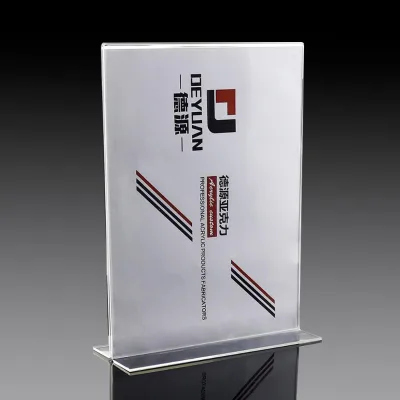
The menu holders are made from acrylic, a transparent material that keeps menus clearly visible from both sides. Acrylic is durable, eco-friendly, and suitable for indoor display in shops, supermarkets, restaurants, and exhibitions. Some related models are listed in plastic or ABS, so confirm the exact material for the specific model you intend to order before committing to a purchase.
What is the minimum order quantity for menu holders?
One listed product specifies a MOQ of 1000 pieces, but other listings state that small quantities are accepted, so requirements vary by model and supplier. If you need a trial batch or low-volume order, state your target quantity when requesting quotes. Customization, size, and printing choices can also affect whether a supplier accepts a smaller minimum order.
Which display settings suit a double sided fixed menu holder?
These holders are designed for indoor use in exhibition shows, specialty stores, supermarkets, retail shops, convenience stores, and home settings. The fixed, non-rotating design and double sided layout make them ideal for counters and tabletops where customers approach from either side. They are not antitheft units, so place them in staffed or monitored areas rather than unattended public spaces.
How are menu holders packed and shipped?
Packing is typically a plastic bag plus carton, and some suppliers can pack according to your request. Shipping options include ocean shipping, airfreight, and express delivery, so you can balance cost and speed based on urgency. Heavy or bulky bulk orders usually suit ocean freight, while sample quantities travel faster by express or air. Confirm packing details in writing before production begins.